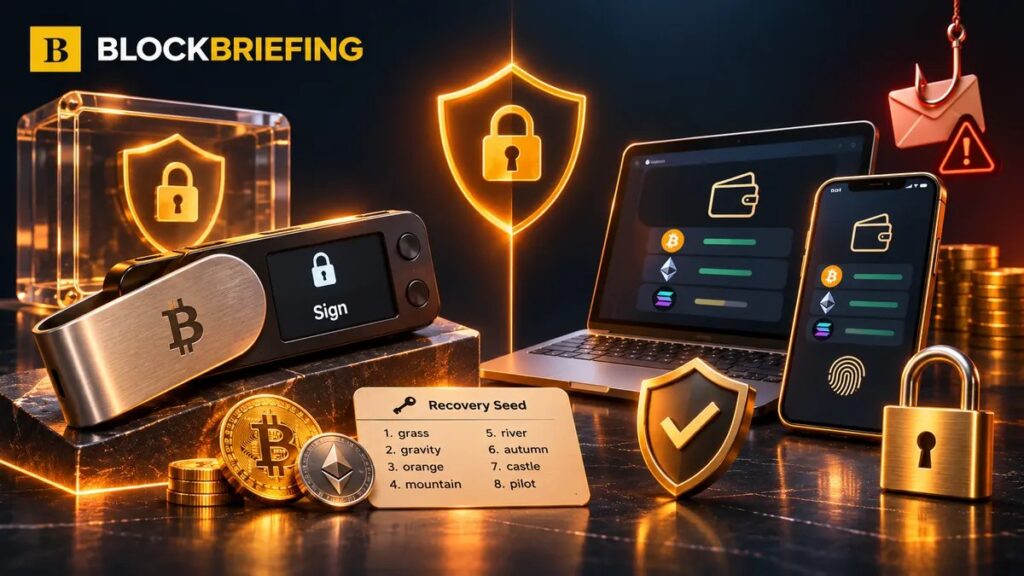
Hardware and software wallets serve the same basic purpose: they help people control cryptocurrency by managing the private keys needed to authorize transactions. They differ mainly in where signing keys are stored and how transactions are approved. A hardware wallet is not a vault containing coins, and a software wallet is not automatically insecure. Both can lose funds through operational mistakes, compromised recovery information or malicious transactions.
Bitcoin.org’s wallet security guidance explains that keeping signing operations offline can protect private keys from malware on an internet-connected computer. It also emphasizes backups, encryption and secure software updates. The distinction between wallet types is therefore a security-design decision rather than a prediction of investment returns or a guarantee against theft.
Where private keys are held
A typical software wallet keeps key material on a phone or computer, often in encrypted local storage. When its owner approves a transaction, the device runs signing software. That design is convenient for frequent interactions but increases exposure to compromised operating systems, malicious browser extensions, stolen devices and fake wallet applications. Keeping the app updated and obtaining it from the official developer remain important controls.
A dedicated hardware wallet aims to keep private keys in a separate signing environment. The connected computer or phone prepares a transaction, while the device signs after the user reviews the requested action. The hardware model can limit direct access to secrets if the host computer is infected. However, users can still authorize a fraudulent address or deceptive smart-contract transaction if they fail to check the device display.
Backups matter more than the device
A recovery phrase or equivalent wallet backup can often restore funds when a device is lost or destroyed. Anyone who obtains that backup may be able to take control of the assets without needing the original hardware. Bitcoin.org recommends keeping backups securely, protecting them from unauthorized access and avoiding dependence on a single physical location.
Do not type a recovery phrase into websites or send it to supposed support staff. A legitimate wallet-support representative should not need the private keys to diagnose routine interface or connection issues. Screenshots and cloud notes create additional copies that may be exposed through account compromise. Some advanced backup arrangements introduce their own recovery complexity; document the restoration procedure without exposing the secret itself.
Choosing for everyday use
A software wallet can be suitable for small operational balances and frequent on-chain activity. A hardware wallet can make sense for larger holdings or longer-term storage, especially when the owner can securely manage backups and verify transactions on a dedicated display. Splitting working funds from longer-term reserves can help contain losses if one environment is compromised.
Wallet safety also depends on the asset and the application. Hardware wallets vary in supported networks, firmware update mechanisms and what transaction details they display. A signature request that appears opaque or cannot be reviewed should not be treated as safe merely because a hardware device is involved. Research firmware provenance, incident-response procedures and whether recovery is possible with independent software.
A practical safety checklist
Before depositing substantial funds, verify the wallet provider’s official download page, record a secure offline backup, test a small incoming and outgoing transaction and confirm that recovery instructions are understandable. For transfers, compare the full recipient address and network; for decentralized applications, inspect spending permissions and revoke ones no longer needed. Security improves when the owner understands the entire process, not simply the device label.
Threat modeling before choosing a wallet
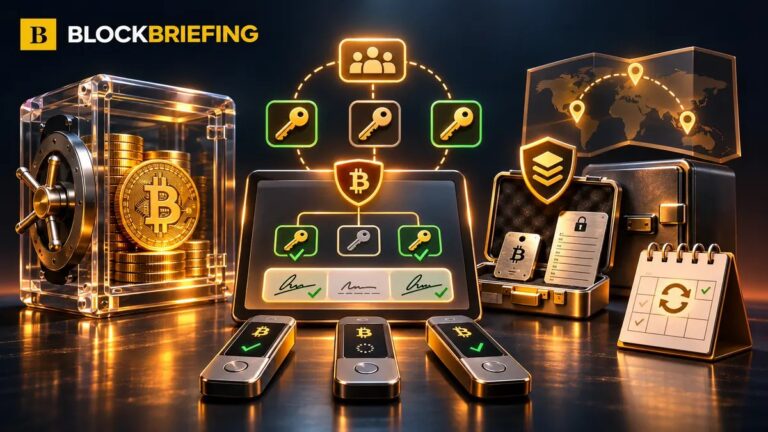
Start by listing what you are protecting against. An everyday phone wallet faces different threats from a long-term treasury where several people may need emergency access. Common problems include a malicious browser extension changing the displayed recipient, malware stealing local wallet secrets, fake software updates, counterfeit physical devices and social engineering that tricks a user into authorizing a payment. No single product eliminates every scenario. An appropriate design must also address accidental deletion, loss of recovery information and the practical ability to recover funds decades later.
What the hardware screen does and does not show
The useful advantage of an independent signing display is the opportunity to compare the device’s recipient and transaction details against the intended payment. But not every protocol presents all smart-contract operations in human-readable form. A transaction may include permissions for an unlimited token allowance, an exchange interaction or a complex message signature that appears only as opaque data. A cautious user should prefer workflows with understandable transaction summaries and treat blind signing as an exceptional risk, rather than assume that a button press is inherently safe.
Firmware, supply chain and recovery exercises
Purchase devices through channels that allow reasonable confidence in their origin; check the manufacturer’s setup and firmware-verification instructions and do not use a preprinted recovery phrase supplied by a seller. Keeping firmware current can address known vulnerabilities, but updates themselves should be obtained through official tools. A recovery test using a small amount can reveal a damaged or incomplete backup before a larger balance depends on it. The backup should include enough information to determine the relevant wallets and network assets without exposing the private words to online storage.
Handling phishing and malicious approvals
The most effective scam sometimes requires no access to the signing key. A fraudulent website can present a transaction whose permissions allow a malicious contract to spend an asset after the user approves it. Review the destination, chain, contract and type of action, and separate a harmless-looking login signature from one that grants financial authority. Where the ecosystem supports it, periodically review token allowances and remove obsolete permissions. Do not trust urgent ‘account verification’ messages that request a seed phrase or direct you to transfer funds to a supposedly secure address.
Cost, convenience and sensible separation
A dedicated device adds purchase cost, setup complexity and physical custody responsibilities. A software wallet may be practical for smaller routine transactions provided the operating system is maintained and the wallet is independently verified. Separate operational and savings wallets can limit how much is exposed to unfamiliar decentralized applications. The deciding factor is not a universal ranking of hardware and software: it is the user’s ability to operate and restore the chosen arrangement reliably, without concentrating every key and recovery copy in one vulnerable place.