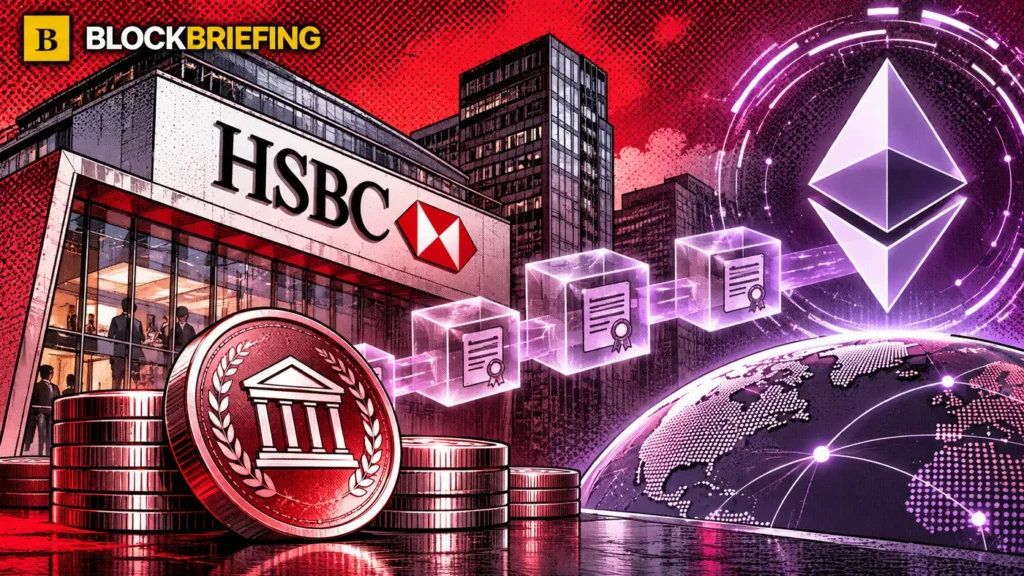
HSBC Asset Management has introduced a tokenized share class of its existing Hong Kong dollar money market fund, bringing a conventional investment product into a blockchain-based distribution model. Official fund materials place the public launch of Class SD on November 18, 2026, with tokenized units representing interests in the established fund.
An official HSBC fund brochure says that one digital token represents one Class SD fund unit. The product key facts outline the structure, risks and restrictions of the tokenized investment class.
What has HSBC launched?
Class SD is not a completely new money market fund. It is an additional way to hold units of HSBC Global Money Funds – Hong Kong Dollar, an investment vehicle launched on March 1, 1991. The existing fund is managed by HSBC Investment Funds (Hong Kong) Limited.
The fund aims to preserve capital and provide daily liquidity with returns broadly comparable to Hong Kong dollar money market rates. Those are objectives rather than guarantees. HSBC states that at least 70% of net asset value will be invested in qualifying Hong Kong dollar-denominated short-term deposits and money market instruments.
The tokenized class uses digital representations of fund units rather than giving investors direct ownership of ETH. This distinction matters because the underlying investments remain conventional money market instruments.
Why is Ethereum relevant?
HSBC’s tokenized-class product documents identify Ethereum as the initial public blockchain for token records. Using the network to represent fund interests does not make the fund an Ethereum investment or guarantee any change in Ether demand.
The token infrastructure also does not mean anyone can freely trade units with any wallet. HSBC’s terms restrict tokenized subscriptions and redemptions to eligible distributors and impose additional token-transfer controls.
Can investors trade the fund tokens freely?
No. HSBC’s key facts say the tokenized classes are offered in the primary market and that no secondary-market trading is available. Eligible distributors are regulated virtual-asset trading platforms or appropriately licensed securities intermediaries.
The official records of ownership and redemption process remain governed by fund documentation. A blockchain token is a representation of the fund unit, not a substitute for all the legal and administrative records used by the fund.
What fees and distribution rules apply?
The brochure identifies a Class SD management fee of 0.30% annually as a percentage of net asset value. Class SD distributes earnings through daily reinvestment rather than cash dividend payments. Switching between share classes is not available for the tokenized class.
Investors need to review the full offering documents, including charges beyond the management fee, digital-asset custody, technology, cybersecurity, and operational risks. Tokenization does not remove the possibility of investment losses.
How does RedCoin fit into the development?
HSBC separately introduced its Hong Kong dollar stablecoin RedCoin in October and identified future tokenized-investment subscriptions as one intended use. Its official RedCoin launch announcement describes that broader strategy.
Stablecoin payments and tokenized fund ownership are separate components. A customer using a stablecoin to subscribe to an investment does not thereby receive interest on the stablecoin itself.
What does this mean for traditional finance?
The launch illustrates how a regulated asset manager can combine familiar fund economics with digital distribution infrastructure. Another institutional approach is described in BlockBriefing’s Standard Chartered, OCBC and StraitsX tokenized deposit report. The important question is not whether the token is tradable like a cryptocurrency, but whether blockchain-based records and settlement improve a controlled financial process.
HSBC’s own documents establish the launch and its limits. Claims about inflows, user adoption, or market impact would require additional data that has not been established by these materials.