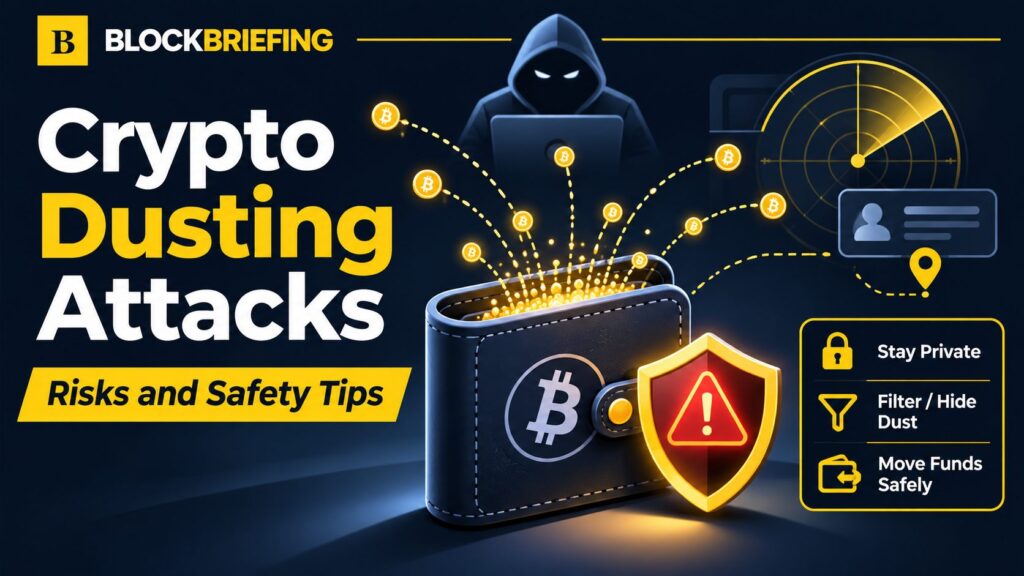
Have you ever noticed a tiny, unexpected amount of crypto in your wallet? It might be harmless spam. But sometimes these little transfers are part of what people call a dusting attack.
What is crypto dust?
“Dust” means a very small amount of cryptocurrency. In some cases, it costs more to move that amount than it’s worth.
Because blockchain addresses are public, strangers may be able to send tiny deposits to your wallet. Receiving one doesn’t automatically mean your wallet has been hacked.
Why would someone send it?
There are two common concerns. First, someone may watch what happens to the small deposit and use public transaction records to make guesses about which wallet addresses are connected. That doesn’t automatically reveal your real name.
Second, scammers may send strange tokens with links or promotional messages. They hope you’ll visit a fake website and approve a dangerous wallet request.
Signs to look out for
- An unfamiliar token appears without you buying or requesting it.
- A token name or transaction message advertises a website.
- Someone says you must pay a fee to unlock an unexpected reward.
- A website asks for your recovery phrase or wallet permissions you don’t understand.
What should you do?
The safest first move is often to leave the unknown token alone. Don’t open links attached to it, and don’t try to claim a reward from an unverified website.
Many wallets let you hide or report unwanted tokens. If you’ve already approved a suspicious app, our token approval guide can help you understand your options.
On some networks, moving tiny deposits together with other funds may also expose more information about your transactions. The right response depends on the network and wallet you’re using.
Dusting versus wallet draining
These aren’t the same thing. Dusting starts with a small incoming transfer and may involve tracking or bait. A wallet drainer tries to get permission to take valuable tokens. One scam campaign might use both tactics, but receiving dust alone doesn’t hand over your funds.
Quick questions
Should I return unexpected dust?
There’s usually no reason to rush to send it back. Sending it may cost fees or reveal more wallet activity.
Can I delete the deposit?
You generally can’t remove a confirmed blockchain transaction, but you may be able to hide the asset in your wallet.
Learn more: Bitcoin privacy tips and FTC crypto scam guidance.