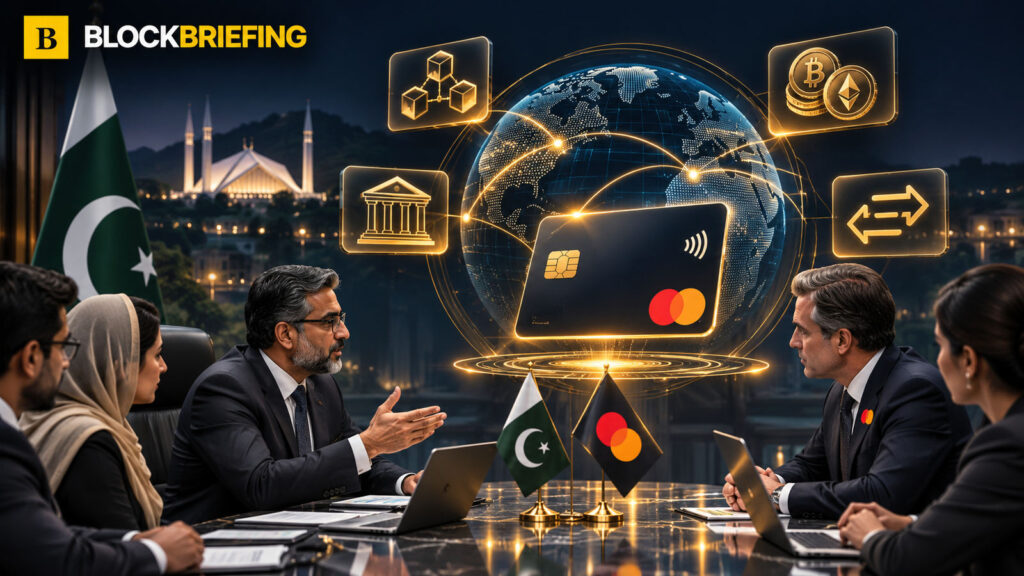
Pakistan’s virtual-assets regulator and Mastercard have discussed how blockchain-based infrastructure could support remittances, cross-border payments and tokenization, according to a November 5 government announcement. The meeting did not announce a signed commercial agreement or an operating crypto payment product.
The Press Information Department statement identified participants as Minister of State and Pakistan Virtual Assets Regulatory Authority chairman Bilal Bin Saqib and Mastercard’s East Arabia division president Mark Elliott. The discussion covered digital financial infrastructure, security and regulatory cooperation.
Remittances Form a Central Part of the Discussion
Pakistan receives more than $40 billion in annual remittances, according to the government statement, making cross-border settlement an important potential application for emerging payment systems.
Transfers from overseas workers and international business activity can involve intermediary institutions, foreign-exchange conversion, service fees and compliance checks. New settlement technology might improve some processes, but the meeting did not provide independently verified figures showing potential cost savings or transaction-speed improvements.
The participants considered how blockchain-enabled payment rails might complement established banking networks. They also discussed accessibility for overseas Pakistanis, freelancers, smaller businesses and regulated financial institutions.
Tokenization and Financial Resilience Also Discussed
Beyond remittances, the agenda included responsible tokenization of financial assets and efforts to improve cybersecurity and financial integrity.
Tokenization can represent an asset or claim on digital infrastructure, but the rights of a token holder depend on the underlying agreement and legal framework. The government statement did not identify a particular tokenized security, stablecoin issuer or production network.
Nor did it establish that Mastercard will launch a Pakistan-specific crypto card or that all digital-asset transfers will immediately become legal under a single authorization.
Regulatory Cooperation Comes Before Product Decisions
PVARA is seeking institutional relationships while Pakistan develops oversight for virtual-asset activity. The announcement emphasized consumer protection, market integrity and cooperation with national authorities.
Regulatory discussion is a useful milestone, but a future licensed service would still need to address customer verification, anti-money-laundering measures, transaction reporting, settlement obligations and possible foreign-exchange restrictions.
A payment company’s willingness to discuss technology with a regulator should not be confused with a regulatory endorsement of an individual cryptocurrency project.
Separate Mastercard Meeting Took Place November 4
Pakistan’s finance ministry also issued a November 4 update describing discussions between Finance Minister Muhammad Aurangzeb and a Mastercard delegation about digital payments, cybersecurity and financial inclusion.
That earlier meeting and the November 5 PVARA discussion involve overlapping industry themes but distinct officials and stated agendas. Neither should be described as a completed nationwide payments deployment.
BlockBriefing has separately reported on Visa’s stablecoin research initiative in Singapore and a South Korean banking-stablecoin feasibility partnership. These are different institutions and projects.
For Pakistan, the most relevant future developments will be documented agreements, named pilot participants, specific regulatory approvals and measurable payment outcomes. Any eventual cross-border product should also be assessed for foreign-exchange handling, complaint procedures, fees charged to senders and recipients, and whether customers have legal rights to redeem or recover transferred value. Those details would determine practical benefits more reliably than broad statements about blockchain innovation. The November 5 announcement establishes dialogue, not guaranteed adoption.