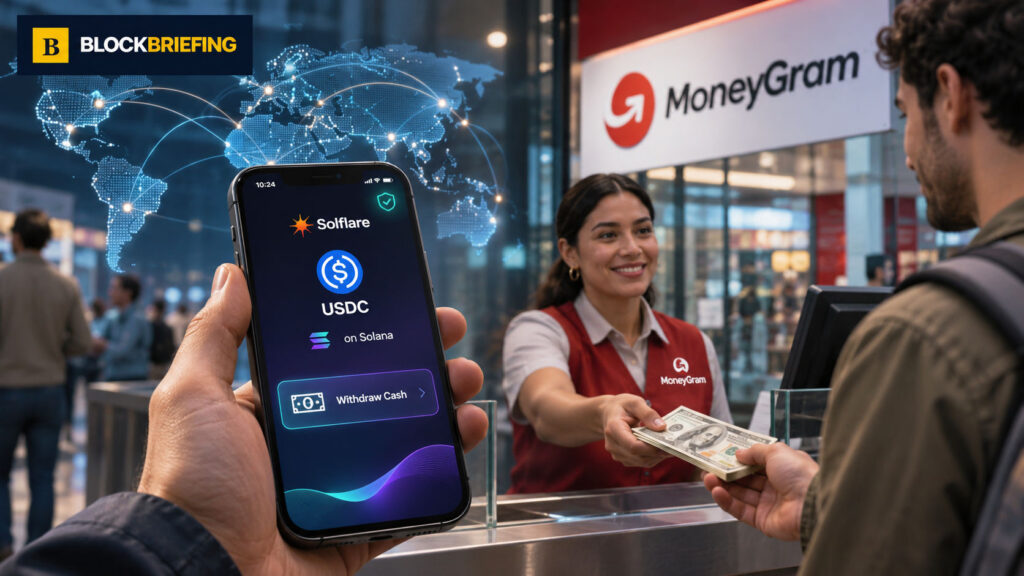
MoneyGram has announced an integration with Solflare that lets eligible wallet users exchange USDC on Solana for physical cash at participating locations in more than 170 countries and territories. The service uses MoneyGram Ramps, an existing platform that connects digital wallets with the company’s retail cash network.
In its company newsroom and a previously published MoneyGram Ramps announcement, MoneyGram explains the underlying cash-to-crypto infrastructure. Its November 16 company-issued release identifies Solflare as a new wallet integration, extending access to this network rather than announcing the launch of a separate payment blockchain.
Eligible Solflare users initiate a cash withdrawal from the wallet’s portfolio view by selecting Withdraw and choosing MoneyGram. The payment flow guides them through the transfer before they collect local currency at a participating retail location.
Solflare Users Can Access Participating MoneyGram Cash Locations
The more-than-170-country figure describes MoneyGram’s broader cash-out network. It should not be interpreted as a promise that every Solflare user in every location can immediately use the service.
Availability depends on market support, customer eligibility, applicable identity checks, and whether a particular MoneyGram location participates. Users should confirm those conditions and the available cash pickup methods before sending USDC.
USDC is a dollar-denominated stablecoin issued by Circle. Using it to obtain cash can reduce the number of steps between holding digital dollars in a compatible wallet and collecting money through an existing retail network.
Cash Withdrawals Still Depend On Local Eligibility Rules
Still, the service is not the same as transferring money directly into a bank account. Users have to follow the wallet’s redemption process and MoneyGram’s procedures for cash collection.
MoneyGram says the integration supports USDC withdrawals from Solflare and that a launch promotion offers zero MoneyGram Ramps fees until December 31, 2026, subject to the offer’s terms. Other costs, including exchange-rate differences or network charges, should be checked within the actual transaction flow.
A no-fee promotion is not a guarantee that the user’s total conversion cost will be zero. The amount of cash received can depend on the quoted local-currency conversion and other applicable conditions.
New Wallet Integration Builds On Existing Solana Infrastructure
The Solflare integration builds on MoneyGram’s August 2026 expansion of Ramps to the Solana blockchain. At that time, Rift was announced as the first Solana wallet connected to the service.
MoneyGram’s original Solana launch said the Ramps platform supported cash deposits in more than 25 countries and cash withdrawals in more than 170 countries and territories. This existing geographic infrastructure helps explain the scope of the latest Solflare announcement.
For wallet developers, access to a retail cash network through an integration may remove the need to build country-specific cash pickup arrangements from scratch. For users, however, the relevant question remains whether their region, wallet and identity status are supported.
The company has not disclosed the number of Solflare users who have completed withdrawals through the new integration or a verified transaction total attributable specifically to Solflare.
Published Announcement Does Not Establish Actual User Adoption
The latest announcement therefore supports a claim about service availability, not widespread actual adoption. It also does not mean MoneyGram has launched a new stablecoin; the integration uses existing USDC.
BlockBriefing’s guide to cross-border stablecoin payments explains how digital dollar transfers differ from traditional remittance methods. MoneyGram’s cash-out connection adds a physical withdrawal step to that process.
The next useful measure of the integration will be whether MoneyGram and Solflare disclose actual transaction activity, supported locations and customer uptake after launch. Until then, eligibility and total withdrawal costs should remain central to users’ decisions.