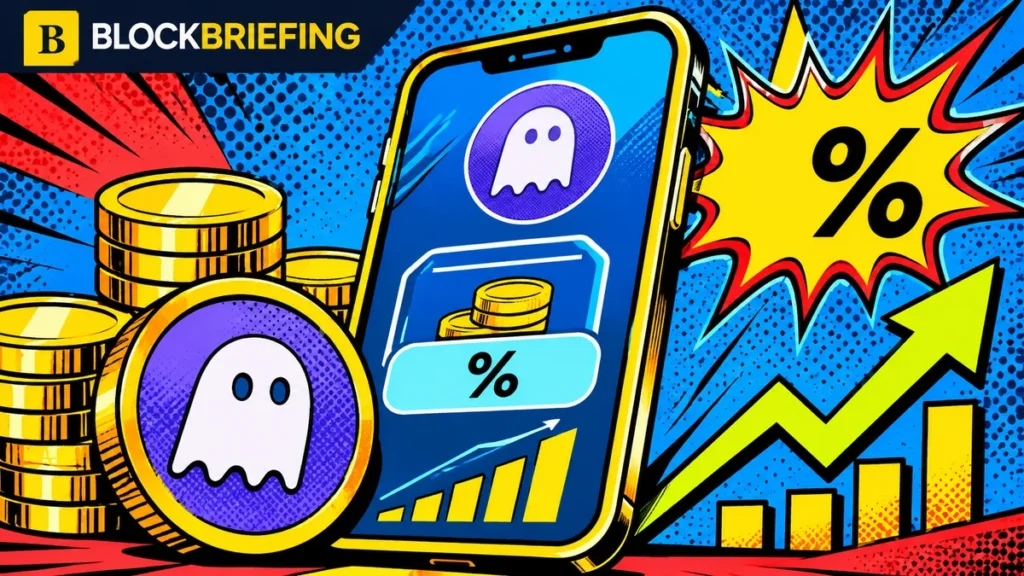
Aave has opened its mobile savings application to the public on iOS and Android, giving users a simplified route to deposit assets into lending markets on its decentralized finance protocol. The launch moves Aave’s consumer-facing product beyond its early-access phase, while bringing familiar questions about variable yields and onchain risk to a wider audience.
Aave Labs announced the full launch on November 25, saying the early-access phase had reached users in more than 170 countries and that the waitlist and Ghost Pass requirement had been removed. The early-access geographic count does not establish identical banking features in every country. The company advertises potential returns of up to 7.25% annual percentage yield, or APY, with earnings paid continuously and no fixed lockup. Terms, eligibility and rates apply.
How the Aave app works
The app routes customer deposits into lending markets on Aave. Borrowers supply collateral worth more than the amount they borrow, and the interest they pay contributes to the yield earned by depositors. The application allocates deposits across supported markets and presents users with a single savings balance.
This structure differs from a bank savings account. Returns depend on activity and rates in decentralized lending markets, which can change as supply and demand shift. The advertised maximum APY is not a guaranteed rate, and eligibility for temporary promotional boosts can affect the quoted yield. Bank-account transfers are available to eligible users in the UK, EEA and US excluding New York, according to the launch notice. The app may charge no bank-transfer fee while the user’s bank may charge its own.
Account access and security features
Aave says users can create an account with an email address or phone number and password, without managing a traditional crypto wallet or recovery phrase. The company describes each account as self-custodial, meaning users retain control of their funds through the app’s underlying account structure.
The launch announcement lists two-factor authentication, withdrawal address whitelisting and one-time passcode verification when a new address is added. Aave also says the codebase has been independently reviewed by nine third-party security firms. These measures can strengthen account protection, but audits and security features cannot eliminate smart-contract, operational or user-side risks.
Important risks users should understand
Aave explicitly states that it is not a bank and that funds are not insured by a government agency. Protections may differ from those available through traditional financial institutions. Users should understand that supplying assets to lending markets exposes them to protocol risks, market disruptions, smart-contract vulnerabilities and changes in liquidity.
Overcollateralized borrowing is designed to reduce lender exposure when borrowers default, but it does not remove all risk. Rapid price movements can trigger liquidations, and technical failures or security incidents can affect access to funds. Users should read the app’s terms and understand how withdrawals and supported assets work before depositing.
What comes next for the product
Aave Labs said it plans to add more ways to deposit, send and receive funds, additional networks for stablecoin deposits and an Auto-Saver feature in the coming weeks. The company has not provided a full timetable for every planned feature in the launch announcement.
The app’s wider release may introduce more users to DeFi without requiring them to interact directly with a wallet interface. That convenience could broaden access, but it also makes clear disclosures about yield variability, custody and protocol risk especially important.
For more background, read our coverage of decentralized finance and crypto fundamentals.