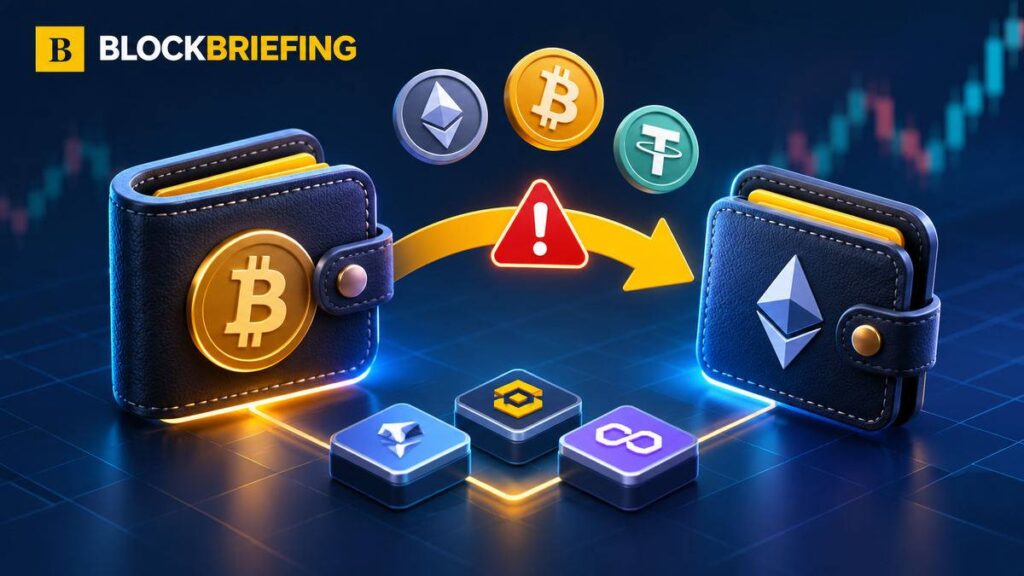
Quick answer: A crypto transfer on the wrong network is not automatically lost. Recoverability depends on the destination address, who controls it, whether the networks are compatible, and whether a custodial exchange or contract can access the assets. Check the transaction on the actual sending chain and never share a recovery phrase with someone promising to retrieve funds.
The first rule: identify the exact mistake
Sending crypto on the wrong network is different from sending it to the wrong address. A network mistake means the transaction happened on a blockchain other than the one the recipient expected. An address mistake means the recipient identifier itself was incorrect. A third situation is sending a supported asset through a network that a centralized exchange does not support for deposits. These cases have different outcomes. No support agent can simply reverse a confirmed, irreversible blockchain transfer. Your next step should be diagnosis, not a recovery payment.
Find the transaction hash and sending network
Open the sending wallet or exchange withdrawal history, then record the transaction hash, asset, network, amount, receiving address and status. Use the explorer appropriate for the actual sending chain. For example, an  Ethereum market price and chart transaction should be checked on an Ethereum explorer; a Base or Arbitrum market price and chart transaction belongs on its own explorer. A transaction hash may not exist yet for a withdrawal that is still being processed internally by an exchange. If the block explorer confirms a transfer but a wallet shows nothing, this can be a display or network-selection issue rather than loss of funds.
Case 1: two EVM-compatible networks
Ethereum, Base, Arbitrum, Optimism market price and chart and many other networks use similar EVM address formats. When the recipient controls the private key of the destination address on the actual receiving network, it may be possible to access the assets by selecting that network in a compatible wallet. This does not require entering the recovery phrase into a new website. An example: Alice meant to receive an ERC-20 asset on Ethereum but Bob transfers the corresponding asset on Arbitrum to Alice’s EVM address. If Alice controls that address, she can inspect Arbitrum and may be able to access the token there. She still must evaluate whether the token is genuine and whether bridging is supported. Matching address formats alone do not establish custody or guarantee recovery.
Case 2: a centralized exchange deposit
Custodial exchange addresses are controlled by the exchange, not by the customer receiving the deposit. An exchange might use an address that also exists on an unsupported EVM chain, but the customer cannot independently sign transactions from that address. The exchange may have a recovery procedure, a minimum threshold or service charges—or may be technically or operationally unable to recover the funds. Collect the withdrawal hash, exact chain and amount, then contact only the exchange’s authenticated support portal. Do not pay someone in a messaging app who claims to be an exchange technician. A successful on-chain transfer does not by itself mean your exchange balance must be credited.
Case 3: non-EVM addresses and incompatible chains
A  Bitcoin market price and chart, Solana or other non-EVM deposit path should not be treated like an Ethereum-compatible network simply because a wallet UI displays a familiar token name. Different address derivation, account models and transaction formats can make access impossible. Some wallet software supports multiple chain types from related seed material, but that does not mean a recipient can access every misdirected asset on every chain. Confirm the specific chain, address standard and custody model in official wallet or protocol documentation. If the relevant destination key or supported recovery route is unavailable, there may be no practical method to retrieve the assets.
Case 4: wrong token or invisible token
Sometimes the network and recipient address are correct but the token does not appear because the wallet has not indexed it. Open the explorer for that chain, verify the recipient’s holdings, then compare the token’s complete contract address against an official primary source. Only after confirming authenticity should the recipient use the wallet’s built-in function to display a custom token. Importing a token into a wallet display does not move or reclaim assets, and it does not mean the token is valuable. Read BlockBriefing’s contract verification guide before interacting with a suspicious asset.
Can a bridge fix the mistake?
A bridge can sometimes move an asset between compatible networks after its rightful owner has obtained control of the funds on the chain where they arrived. It cannot generally pull tokens from a custodial exchange address or a contract that you do not control. Bridging may introduce transaction fees, bridge fees, security exposure, waiting periods, liquidity limitations and asset-version differences. Check the bridge’s official documentation, supported routes and exact token contract before use. In some situations, depositing directly through the correct supported network after separate recovery is safer than attempting a complicated bridge route.
What about a contract address?
If a transfer lands at a smart contract rather than a user-controlled account, recovery depends on the deployed contract’s behavior and any legitimate administrator powers. A contract might include a withdrawal or rescue function; it might not. An explorer showing tokens inside a contract is not proof that anyone can return them. Avoid asking strangers to deploy a “recovery smart contract” or to approve unlimited transfers. The relevant project’s verified support or development team can clarify whether a documented recovery method exists, but they cannot guarantee retrieval.
A safe recovery decision tree
- Is the transaction confirmed? If not, investigate the sender’s pending withdrawal or transaction first.
- Which blockchain actually processed it? Confirm from its explorer, not from a screenshot alone.
- Does the intended recipient control the destination’s private key on that network? If yes, check that chain in the existing trusted wallet.
- Is the destination custodial? If yes, use the exchange’s official recovery process.
- Is the destination a contract or incompatible chain? Check documented functionality and acknowledge that recovery may be impossible.
- Before moving any recovered assets, independently verify token identity, fees and support for the proposed route.
What not to do after an accidental transfer
Do not share a seed phrase, private key, verification code or remote-access session with anyone offering help. Do not connect your wallet to a link sent in a private message. Do not sign an unexplained approval or “validation” transaction. Do not automatically send a second transaction because the first is not visible in the recipient’s wallet. And do not treat a block explorer’s “Success” label as confirmation that an exchange credited the deposit. Wallet and exchange support channels cannot change blockchain history; recovery, when possible, requires control of destination assets under the chain’s actual rules.
How to prevent future wrong-network transfers
Before initiating a transfer, compare the sending chain and the destination’s supported deposit network as two separate fields. Verify the entire receiving address, token contract and any required memo or tag. Consider a small test transfer when fees permit and the destination supports it. Copy addresses through a trusted channel, avoid manually typing them, and review the transfer confirmation screen. On an exchange, regenerate the deposit instructions each time rather than assuming a saved screenshot is still valid. Clear labeling of saved addresses can reduce confusion but must not substitute for checking live deposit instructions.
Frequently asked questions
Can I recover USDT sent on the wrong network?
Possibly. The answer depends on the actual chain, token contract and control of the receiving address. “USDT” alone is not enough to determine recoverability.
Does the same EVM address work on every network?
A private key can produce the same account address on many EVM networks, but the wallet or custodian must control that key and the asset must actually exist on the network used.
Can an exchange retrieve an unsupported deposit?
Some exchanges offer limited recovery services; others do not. The exchange controls the address and must evaluate the specific case.
Will changing my wallet network reverse the transaction?
No. It only changes which chain you inspect or interact with. The original confirmed transfer remains recorded where it happened.
Primary sources and related guides
Primary support reference: MetaMask: funds sent on a wrong network; technical context: Ethereum transaction documentation. Continue with BlockBriefing’s bridge explainer, explorer tutorial and pending Ethereum transaction guide.
Editorial note: This is educational troubleshooting information, not a guarantee of asset recovery or individualized financial, legal or security advice. Network support and recovery policies can change. Confirm current instructions with the wallet, exchange and protocol involved.