

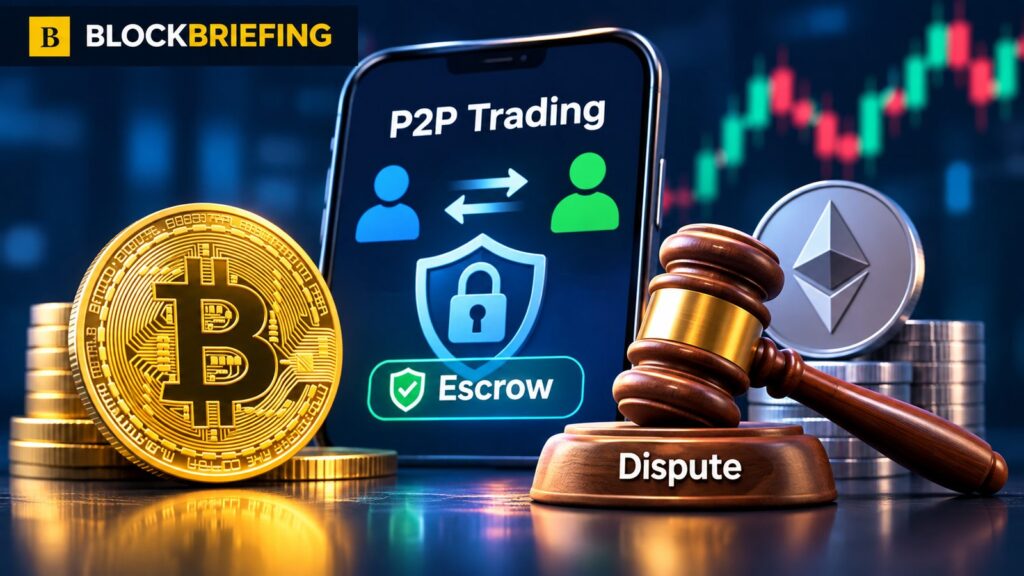
If a buyer has paid for cryptocurrency through a peer-to-peer (P2P) exchange but the seller has not released the coins, the buyer should keep the order open, save payment evidence and use the exchange’s official dispute process. A payment screenshot alone is not proof that the seller received the money. On escrow-based marketplaces, the exchange normally restricts the seller’s crypto while the order is active, subject to its rules.
The first question is whether the transfer has actually arrived. Bank transfers can be delayed, particularly across payment systems or during account reviews. The seller should check the receiving account rather than rely on an SMS, a screenshot or a buyer’s claim. Once the buyer has genuinely paid, canceling the order at a counterparty’s request can make recovery more complicated.
What Buyers Should Do When Sellers Delay Release
- Check the payment status. Open the bank or payment provider’s app and confirm that the transfer was submitted successfully to the payment details shown inside the order.
- Preserve evidence. Save the order number, amount, recipient details, transfer reference and relevant in-app conversation. Avoid posting account statements publicly.
- Use the order chat. Ask the seller to verify the payment in the receiving account. Keep correspondence inside the official marketplace.
- Open a dispute or appeal. Follow the instructions associated with the specific order; provide only the documentation requested through authenticated support channels.
- Follow the case status. Respond promptly to requests for additional evidence. Do not pay an outside intermediary promising to release the escrowed funds.
For a separate explanation of where the coins sit while this happens, see BlockBriefing’s guide to who holds crypto during P2P trading. The exchange’s escrow protection applies to the crypto side of the transaction; it does not automatically reverse a bank transfer.
How Binance Handles Disputed Peer-to-Peer Crypto Orders
According to Binance’s official website appeal instructions, buyers can open the affected order and select Appeal from its pending-release page. They then choose the reason, describe the issue and submit relevant evidence. The order’s appeal-status screen shows the progress of the case.
Binance’s published instructions describe an initial period for the counterparty to respond, followed by customer-support review when the dispute remains unresolved. These procedures and timings can change. Traders should follow the instructions displayed in their own account rather than assume a support agent will act within a fixed period.
A separate Binance support article on canceled or completed orders explains that post-order appeals can address situations including payment after cancellation, chargebacks and funds not received after a crypto release. An appeal is a review procedure, not a guarantee of reimbursement.
What OKX Says When Sellers Do Not Release
OKX’s buyer guidance recommends contacting the seller using the order chat and submitting a dispute when the seller cannot be reached or will not release the assets. Its P2P buying instructions also describe checking that the bank payment has processed, marking payment completed before the deadline and using the reminder or dispute tools available on the order page.
OKX distinguishes immediate bank transfers from non-instant payments. A seller may be unable to confirm funds that are still pending. The platform’s dispute-handling policy describes intervention in certain delayed-release cases, but outcomes depend on the evidence, account eligibility and applicable rules.
How Bybit’s P2P Appeals Differ From Others
Bybit describes both normal-track and fast-track P2P appeals in its official appeal FAQ. The fast-track option is restricted to certain eligible disputes, including situations where a buyer has paid but not received crypto. It is not available for every asset or order type. Normal-track appeals cover a wider range of issues and can take longer.
Bybit also says funds may remain frozen for a period after an appeal ends. An order showing a completed appeal therefore does not necessarily mean that all assets are immediately withdrawable. Users should consult the status and any holding period shown for their account.
What Sellers Should Check Before Releasing Cryptocurrency
A seller who sees a ‘payment sent’ notification should independently confirm receipt in the correct bank or payment account. The amount, payer identity and transfer status should match the order and the exchange’s requirements. A transaction described as pending is not necessarily settled, and some payment methods can be reversed after an initial credit.
If payment has not arrived, the seller should not release cryptocurrency merely to stop a dispute. Instead, they can submit a bank statement or transaction-history evidence through official support where appropriate, with unrelated personal information redacted when the platform permits. Never share passwords, one-time codes or wallet recovery phrases with either the counterparty or anyone claiming to be support.
Can an Exchange Recover Crypto After a Dispute
Escrow helps while the relevant cryptocurrency is still locked under the order. After release, recovery depends on the platform’s rules, the recipient’s balance, the payment method and the facts of the case. It is unsafe to assume that an exchange can reverse a completed blockchain transfer or recover money already sent outside its system.
If a counterparty asks to move the conversation to Telegram or WhatsApp, sends a new external payment address or demands an extra ‘release fee,’ users should treat those requests as warning signs. Keep records and report suspected impersonation through the verified app or website. In cases involving suspected bank fraud, contacting the payment provider promptly may also be necessary.
Bottom line: For a genuinely paid but unreleased P2P order, the safest route is to preserve proof, keep the official order and communications intact, and use the marketplace’s dispute process. Buyers and sellers should confirm facts through their own accounts rather than screenshots supplied by strangers.