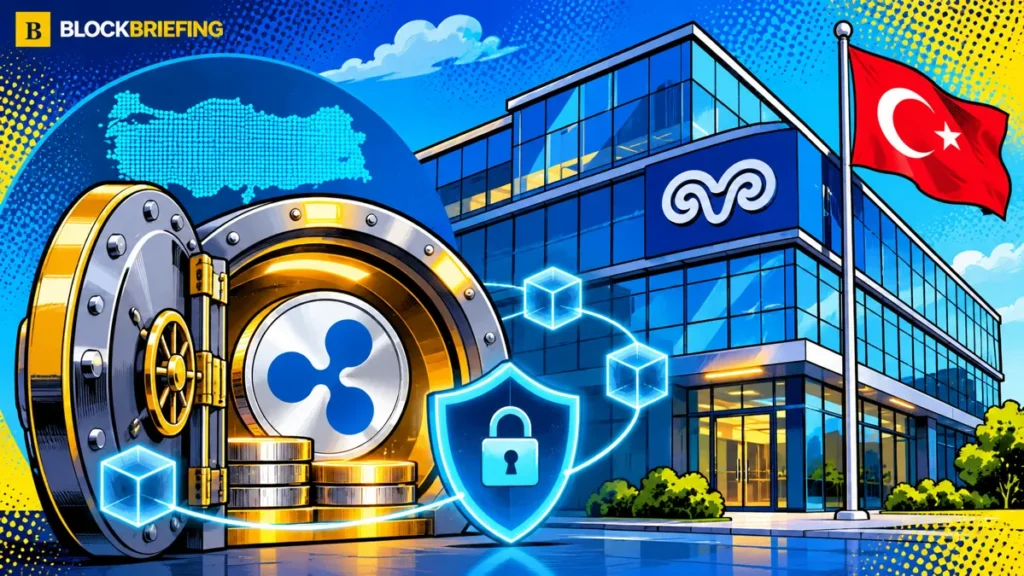
Ripple has announced a custody partnership with Turkish bank Yapı Kredi, expanding its role in the infrastructure financial institutions use to safeguard digital assets.
In its November 25 announcement, Ripple said its custody technology will operate on the bank’s own infrastructure and support its digital asset services.
Why custody matters
Custody is distinct from trading. A trading platform provides an interface for buying and selling assets, while a custodian safeguards them and manages access. Banks entering this business must consider how transactions are authorized, how records are reconciled and how access is restored after operational problems.
Ripple said Turkish trading platforms must keep at least 95% of customer crypto assets with authorized custodians. The partnership illustrates the growing importance of infrastructure that helps institutions meet local requirements.
Running custody infrastructure on bank premises can give an institution greater direct control over its technology environment. However, the location of the infrastructure alone does not establish how secure it is. Operational controls, independent testing and incident response remain important.
Does the partnership involve XRP?
The announcement focuses on custody rather than a purchase of XRP. It does not disclose a commitment to buy the token or a projected amount of assets under custody. Investors should distinguish between Ripple’s enterprise business and demand for XRP.
For the wider market, the development illustrates how established financial companies can enter digital asset services without issuing a new token. The infrastructure supporting such services may be commercially important even when its adoption does not directly affect cryptocurrency prices.
Follow further developments in our institutional crypto coverage.
What to watch next
Useful measures of progress would include the assets supported by the custody platform, customer adoption and any additional disclosures about asset segregation and operational safeguards. The partnership itself does not establish the scale of future activity.