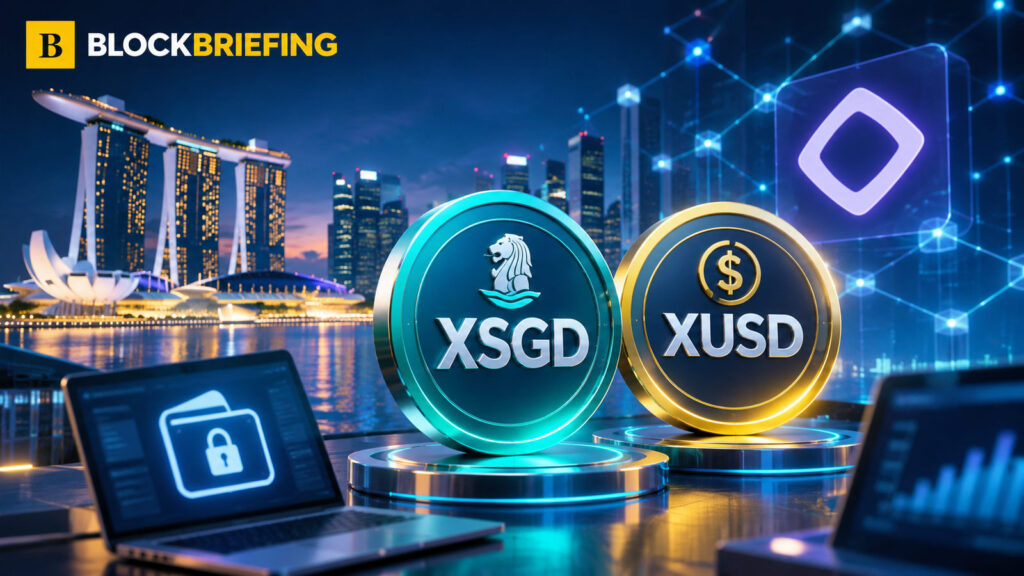
StraitsX has selected digital-wallet infrastructure provider DFNS for a pilot supporting the planned native issuance of its Singapore dollar and US dollar stablecoins on the Monad blockchain. The initiative is intended to prepare institutional controls ahead of a proposed early-2027 deployment, rather than announce that the tokens are already live on the network.
According to DFNS’s November 4 announcement, the Singapore-based issuer will work with the technology provider on wallet management, token administration and policy enforcement. StraitsX will remain responsible for issuance, reserves and relevant regulatory obligations.
XSGD and XUSD Planned as Native Monad Assets
The planned products are XSGD, which is denominated in Singapore dollars, and XUSD, which is denominated in US dollars. Both are issued by entities within the StraitsX group under Singapore’s payment-services framework.
StraitsX announced its intention to expand to Monad on October 1. The November 4 development identifies DFNS as an infrastructure partner for the pilot and should not be confused with the earlier network expansion announcement.
Native issuance would mean creating the stablecoins directly on Monad, rather than making users depend entirely on representations bridged from another chain. Such an arrangement can change how issuance and redemption processes are administered, although it does not eliminate the need for banking access, reserves or supervision.
DFNS Provides Wallet and Policy Controls
DFNS said its infrastructure can let an issuer define which personnel or services may authorize minting, burning or transfers, under what conditions, and with which audit records. This is particularly important for regulated issuers whose token supply must remain connected to reserve and redemption arrangements.
The company said its Monad integration is available to support preparation of the pilot. DFNS is a technology provider; it is not taking over StraitsX’s responsibilities as stablecoin issuer or asserting ownership of reserve assets.
StraitsX describes XSGD and XUSD as fully reserved and substantially compliant with Singapore’s forthcoming single-currency stablecoin framework. That is the company’s regulatory characterization and does not establish that every future feature has received separate approval.
Cross-Border Payments Are a Potential Application
The partners said they may explore cross-border transfers, settlement flows and payment-card programs using the stablecoins. None of those potential applications should be reported as a product already launched on Monad.
Transaction speed and low network fees may make such applications attractive, but the practical value depends on regulatory permissions, institutional integration, liquidity and access to redemption at face value.
The November 4 announcement refers to roughly $70 billion in annualized stablecoin transaction volume across StraitsX’s infrastructure. This is a company-reported operational figure, not trading volume generated on Monad.
Regulated Stablecoins Expand to New Networks
The partnership adds to a wider effort by payment providers to make dollar-linked and local-currency stablecoins usable across compatible networks. BlockBriefing recently covered OnePay’s USDC deposits across multiple blockchains and HashKey’s use of tokenized bank deposits. Those products have different issuing entities, legal structures and risk profiles.
The next verified milestone for the StraitsX–DFNS partnership will be completion of technical and compliance work and confirmation of the native XSGD and XUSD rollout. The stated early-2027 timeline is a target, not a guarantee.