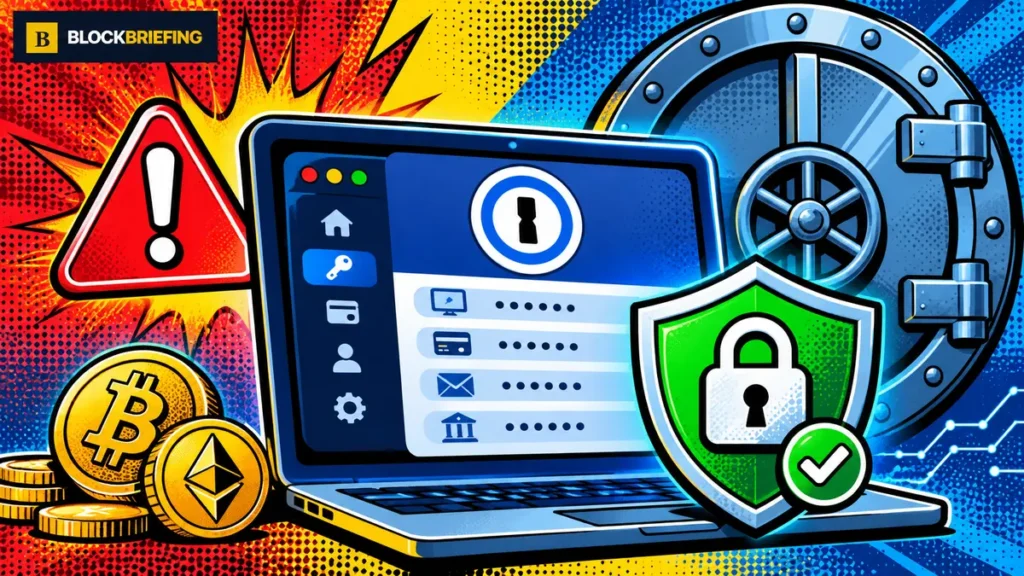
1Password has disclosed a security incident involving its internal systems. The password manager says an attacker obtained limited customer account information, but that encrypted vaults and their contents were not affected. The disclosure is relevant to crypto users who rely on password managers to protect exchange logins and other sensitive accounts.
In an official update on November 25, the company said its investigation began on November 19 following suspicious activity involving an employee’s corporate GitHub account. The attacker subsequently accessed internal systems and copied account records affecting some customers.
What information was exposed?
The company identified names, email addresses, account identifiers and certain account activity details among the information copied. Some invitation and recovery-related link tokens were also involved. According to 1Password, those tokens could not independently grant account access.
The distinction between account metadata and vault contents is important. Account records may help identify a customer, but they do not necessarily contain the passwords or other secrets stored inside that person’s encrypted vault.
1Password says its applications and browser extensions were not affected and that it does not hold the account passwords and Secret Keys needed to unlock customer vaults. These are the company’s findings; they should not be interpreted as independent confirmation that every possible consequence has been ruled out.
Why crypto users should watch for phishing
Even when passwords remain protected, exposed email addresses can make fraudulent messages more convincing. A criminal might impersonate a service provider and ask a customer to respond to a supposed security alert or account recovery request.
Crypto users face particular risks because unauthorized transfers from self-custody wallets can be difficult or impossible to reverse. A password manager breach does not itself mean a blockchain wallet has been compromised, but misleading messages could create a separate risk if a user reveals sensitive information.
Customers should open their password manager directly rather than follow unexpected links. They should avoid sharing wallet recovery phrases, private keys or one-time security codes. An unsolicited request for such information should be treated with suspicion.
How the company responded
1Password says it restricted the compromised access, restored affected services and began replacing potentially exposed internal credentials. It also strengthened controls around its software development infrastructure and increased the length of verification codes used in certain account workflows.
The company reports that it has engaged outside cybersecurity specialists to review its response. It says customers do not need to make changes to their accounts as a result of the incident, while advising them to be alert to unexpected communications.
Readers can find additional guidance in our wallet security coverage. The key distinction for now is that 1Password has reported an internal systems breach, not a confirmed theft of customer vault secrets or cryptocurrency. Users should monitor official updates for any changes to that assessment.