
Bitcoin price slipped below $59,000 on November 25 as buyers struggled to regain the $60,000 level. The decline has put the recent recovery under pressure and brought lower support zones back into focus. A sustained move above $60,000 could ease the immediate selling pressure, but Bitcoin still faces several resistance levels before a broader recovery can take shape.
Market data from CoinGlass showed Bitcoin trading near $59,000 during the session. Historical data also shows that BTC recovered from around $55,150 on November 21 before reaching approximately $64,480 on November 23. The reversal from that rebound points to renewed selling at higher prices.
Bitcoin Price Faces Resistance Below $60,000
The $60,000 area is the first level buyers need to reclaim. Bitcoin traded above $61,000 earlier in the week, but the recovery failed to hold. This leaves the short-term market structure weak, with sellers likely to test any move back toward the previous trading range.
A sustained four-hour close above $60,000, followed by a successful retest, would offer an early sign that buyers are regaining control. The next resistance zone sits around $61,200 to $61,600, where Bitcoin traded on November 24. Beyond that, the recent rebound high near $64,500 is a more important test for a change in trend.
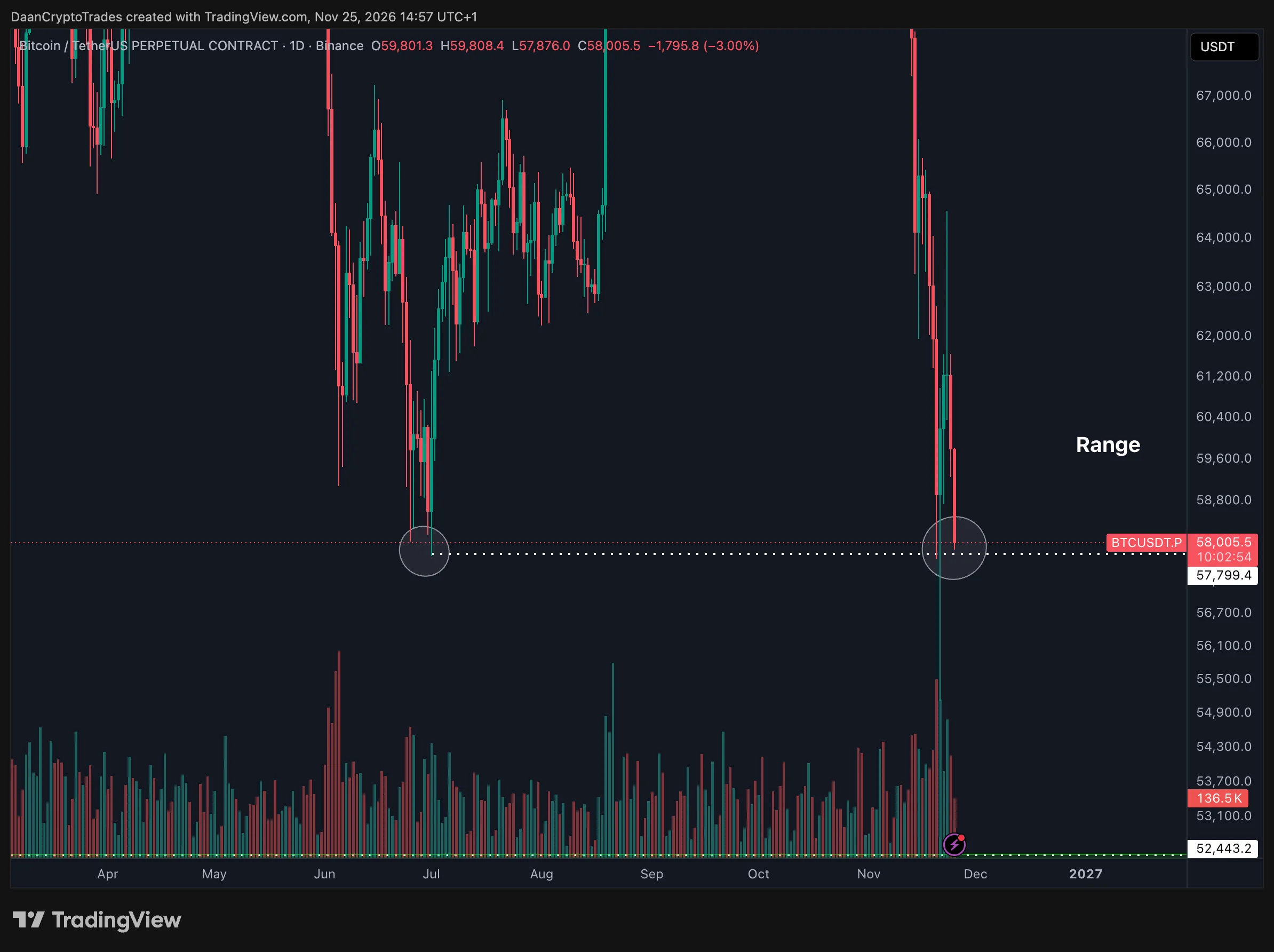
Can Bitcoin Hold Its Recent Support Levels?
The immediate downside area to watch is around $58,500 to $59,000. If buyers fail to defend this zone, the November 20 low near $57,700 could become the next reference point. A further breakdown would expose the November 21 low near $55,150.
A brief move below support does not always confirm a breakdown. Bitcoin could sweep a recent low and then recover as traders close short positions. A return above the broken level, backed by stronger buying volume, would offer better evidence of a recovery than a single sharp bounce.
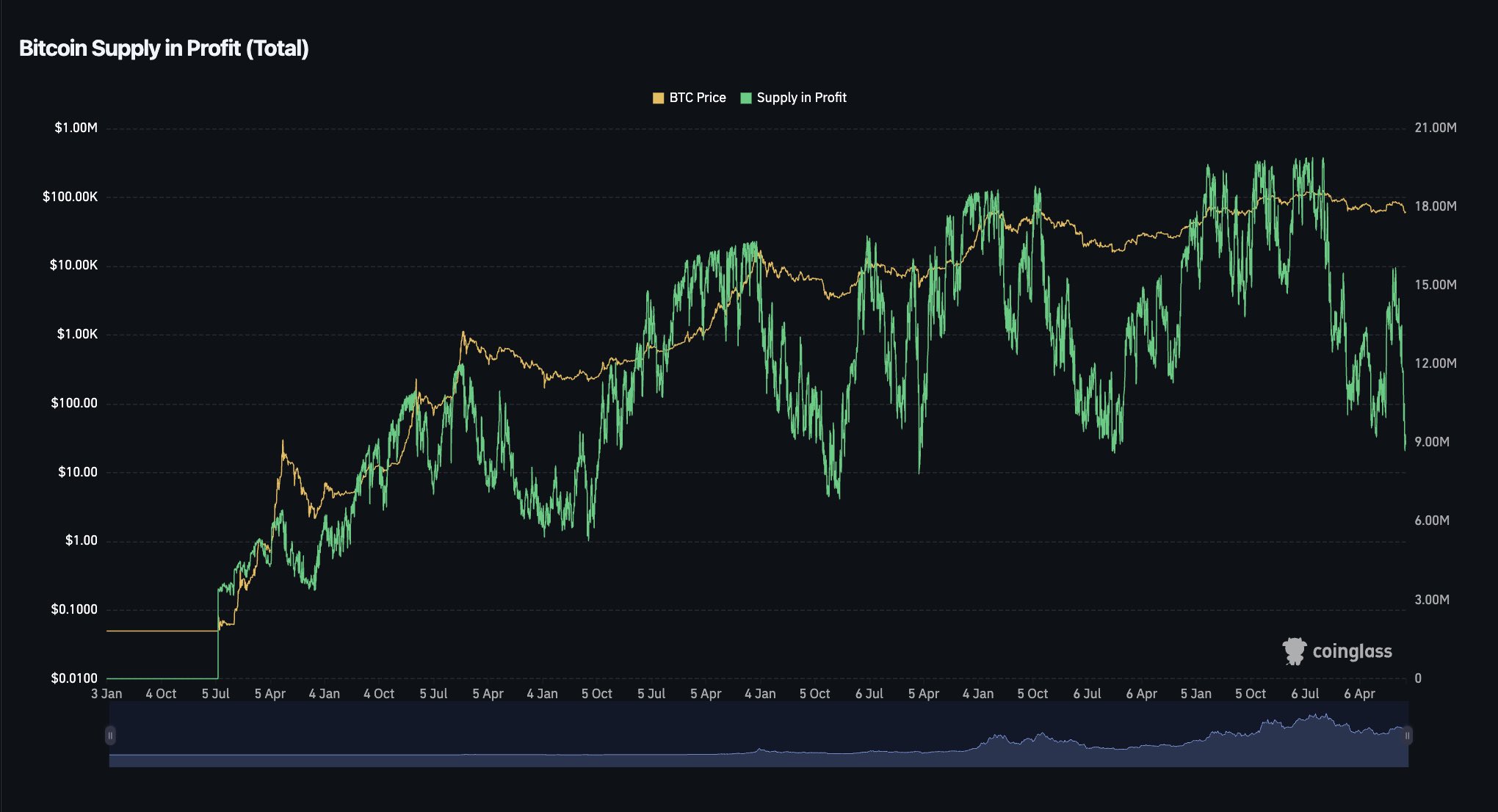
Bitcoin Futures and ETF Demand Remain Important
Futures positioning can amplify moves in both directions. When leveraged traders are forced to close losing positions, the resulting orders may accelerate an existing trend. A rise in open interest without stronger spot demand can also make a rebound more vulnerable to another sell-off.
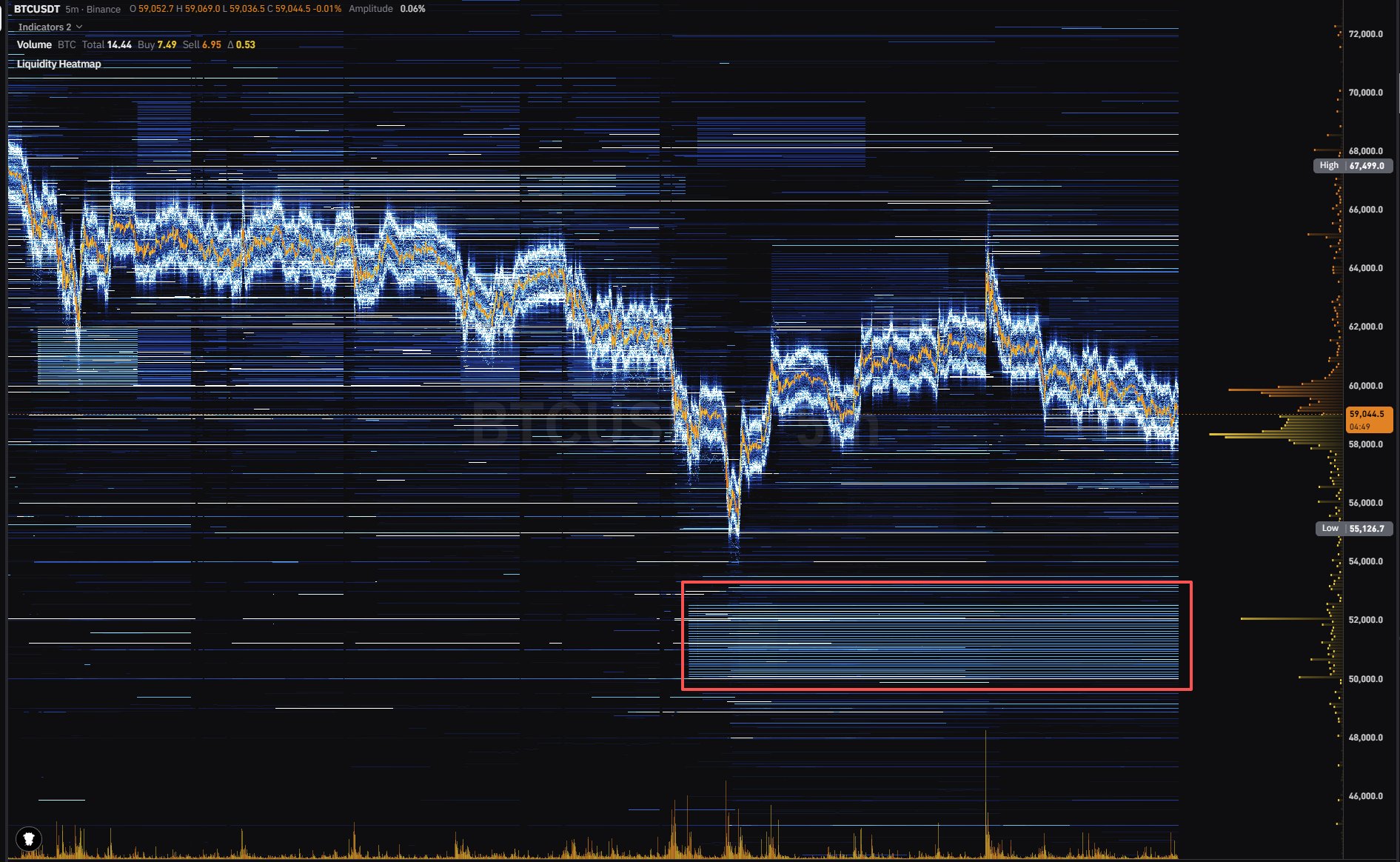
Meanwhile, Farside Investors recorded US spot Bitcoin ETF net outflows of $569.7 million on November 23 and $231.4 million on November 24. The combined $801.1 million in withdrawals shows that demand through these funds remains under pressure. ETF flows alone do not determine the Bitcoin price, but continued outflows may make a sustained recovery harder.
BlockBriefing’s broader crypto market analysis examines the wider selling pressure behind the decline.
Bitcoin Price Outlook for the Next Sessions
The bullish scenario requires Bitcoin to regain $60,000 and establish support above it. A move through $61,600 would improve the short-term outlook and put $64,500 back in focus. A rejection below $60,000, however, would keep the risk of a return to $57,700 and $55,150 in play.
For now, Bitcoin remains vulnerable below its recent resistance levels. Traders should distinguish a short-lived rebound from a sustained recovery. Stronger spot demand, improving ETF flows and a series of higher lows would provide clearer evidence that the downtrend is losing momentum.
Methodology: Support and resistance zones are based on recent BTC/USD daily highs and lows. The CoinGlass market snapshot is from November 25, 2026. Farside Investors’ ETF data covers completed US trading sessions through November 24. Intraday price levels are approximate and can vary by venue.