Bithumb will temporarily suspend deposits and withdrawals for 25 crypto assets during its monthly asset inspection. The scheduled window will run for 10 hours from November 30 into December 1 in Korea. Bitcoin, Ether, XRP and Solana are among the assets covered.
In its November 24 official announcement, Bithumb set the window from 5:00 PM on November 30 to 3:00 AM on December 1, Korea time. That is 08:00 to 18:00 UTC on November 30. The exchange said the window could end early or run longer and the schedule may change with market conditions.
Which assets the Bithumb transfer pause covers
The list includes BTC, XRP, ETH, SOL, DOGE, WLD, XLM, TRX, ONDO, SHIB, KAIA, ADA, ETC, LINK, SUI, BCH, PEPE, HBAR, ENA, BTT, 0G, BASED, PRL, B3 and BLEND. Bithumb says the pause applies to transfers for those assets across its app, web interfaces and API.
The exchange also plans to suspend new staking and unstaking requests for affected assets under its fixed-term staking service during the window. It says other services remain available. Customers dealing with a token that already has a separate restriction should check that asset’s notice as well. For example, the exchange separately announced a 0G trading warning that affects 0G deposits.
How Bithumb plans to handle pending transfers
Bithumb says it will automatically credit crypto deposited during the pause after its inspection finishes. It also says withdrawals that were incomplete before the cutoff will be processed automatically after the inspection. These procedures appear in the inspection notice. An asset-specific restriction may still apply, which is why it matters to check the relevant transfer page.
An exchange records deposits and withdrawals in its own system, even when the underlying transaction is visible on a public blockchain. When an exchange delays credit, a transaction may appear confirmed in a block explorer before the receiving account balance updates. BlockBriefing’s guide to delayed crypto deposits explains how to check those two records.
For withdrawals already submitted, the exchange’s history can show whether a transaction identifier exists and whether the request has been broadcast. If the request is still pending, the planned end time gives users a point to check again. The exchange has not guaranteed a precise completion time for each transfer.
Why Bithumb runs the inspection
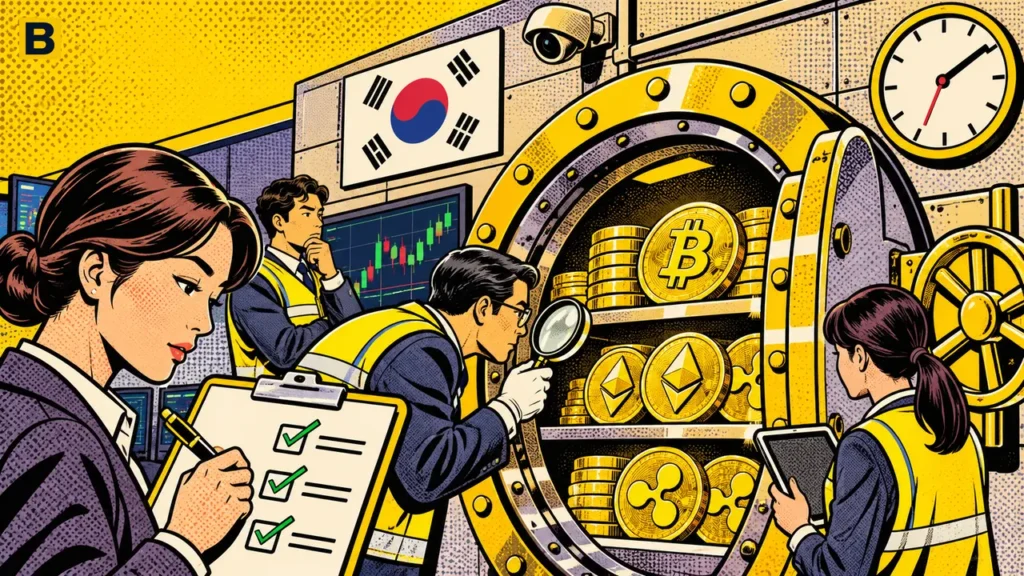
Bithumb says an external accounting firm performs the monthly inspection under industry best practices set by South Korea’s Digital Asset eXchange Alliance. The exchange describes the scope as at least 20 assets and at least 80% of the value of crypto held in custody for users. This month’s notice names 25 assets.
The announcement provides the inspection window and explains which services it affects. The value thresholds describe the scope of the inspection. A customer deciding when to transfer funds can use the exchange’s published window and check whether the relevant wallet service has reopened before sending. Bithumb says it will issue another notice if the planned inspection schedule changes.
The window crosses midnight in Korea, so users comparing it with another exchange’s schedule should convert both endpoints to the same time zone. In UTC, the full window falls on November 30.