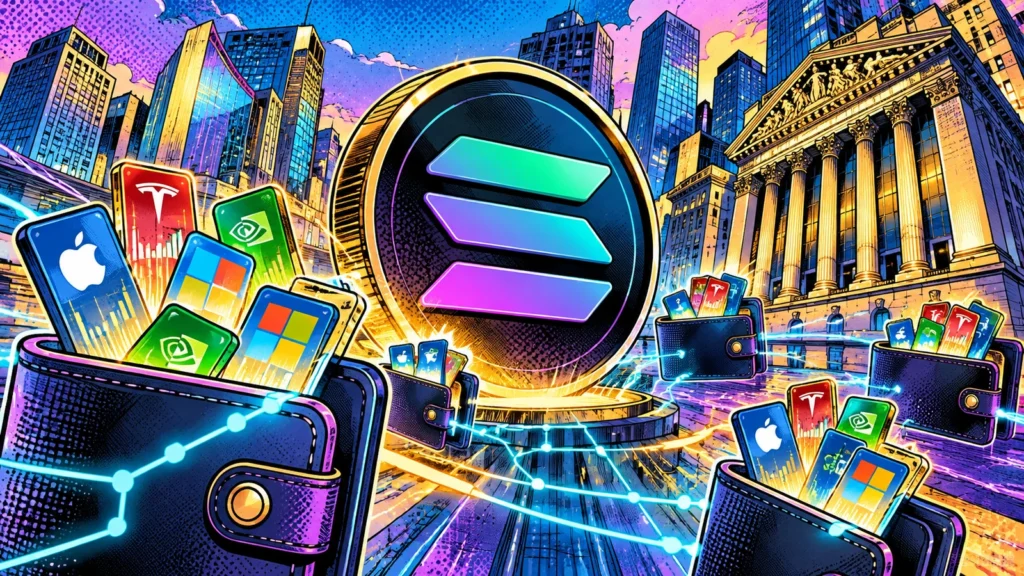
Solana’s tokenized-stock holder count has passed 1.5 million, according to an October 26 update from the network’s official account. The new milestone is about five times its August level, putting on-chain equities back in focus even as demand for the SOL token moves separately.
The latest figure describes the number of wallets or addresses associated with tokenized stock products. It should not automatically be read as 1.5 million different people. A single investor can operate several wallets, and a wallet can receive tokens without making a conventional purchase.
Related research: Our Solana project profile explains the network and links to its official documentation.
Solana reports record tokenized-equity participation
In its October 26 announcement, Solana said the holder count reached a record and increased fivefold from August. The post follows a wider expansion in tokenized stocks, which offer blockchain-based exposure to shares or other equity instruments.
The network had already crossed one million cumulative tokenized-stock holder wallets in September, according to the Solana Foundation’s official September ecosystem roundup. That report put September’s tokenized-equity trading volume at around $4.4 billion and total tokenized-stock supply at about $684 million.
These numbers track different things. Holder addresses show distribution. Trading volume measures assets exchanged over a period. Supply reflects the value of outstanding tokenized equity products. None of them alone proves how many new investors have arrived.
What is driving tokenized stocks?
Tokenized equity services can offer smaller transaction sizes and around-the-clock access on supported venues. Their appeal also depends on the issuer, the rights behind each token, the availability of redemptions and the country in which a buyer lives.
Some products represent claims on underlying securities, while others use a different legal or economic structure. Investors should read each issuer’s documentation rather than assume every stock token carries the same voting, dividend or redemption rights as ordinary shares.
Solana’s large stablecoin market also provides a payment route for trading these assets. But a buyer who uses USDC to acquire a tokenized stock is not necessarily purchasing a meaningful amount of SOL. Network fees can be small compared with the value of the shares being traded.
Why the milestone matters for SOL
The holder record supports the case that more financial applications are using Solana. It does not establish a direct relationship between tokenized equity growth and the SOL price. Transaction fees, liquidity, fund flows and risk appetite affect the token market in different ways.
The next meaningful checkpoints are sustained activity by holders, the amount of capital actually deposited, how many addresses remain active, and whether regulated issuers expand their product ranges.
For a related development in the region, see BlockBriefing’s report on Solana Company’s planned Hong Kong validator operations.
Primary sources: Solana’s official October 26 announcement and the Solana Foundation’s September 2026 ecosystem report. Figures are snapshots and may change.