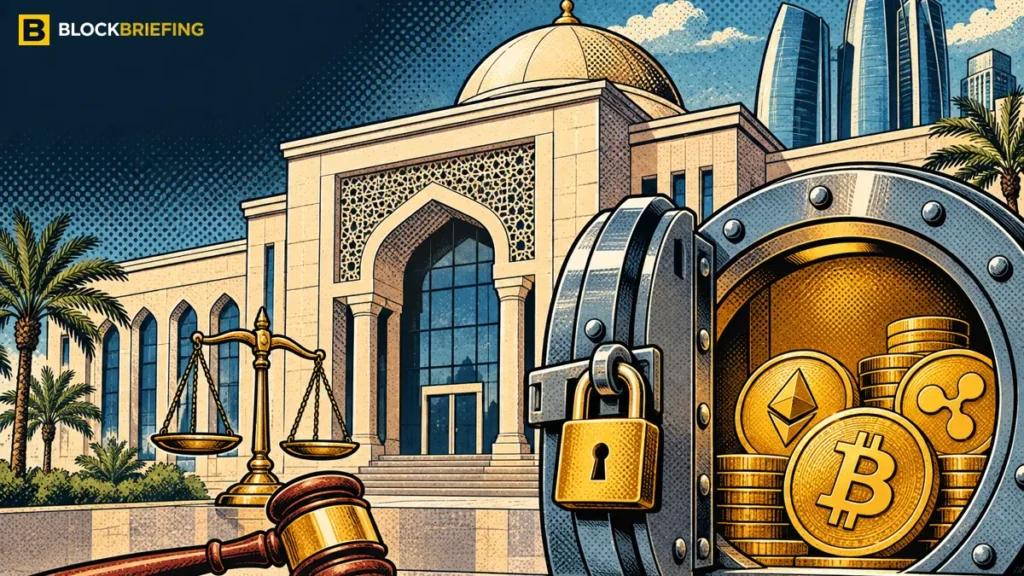
Binance says it obtained a court order in Abu Dhabi to support efforts to recover digital assets linked to its October 29 security incident. The order gives the exchange a way to pursue assets that issuers and other partners have restricted while it continues to trace stolen funds.
In its official update, Binance said the order came from the Abu Dhabi Global Market courts. Some issuers and exchanges require a formal court order before they will release, transfer or return frozen assets, the company said. Its update gave no figure for how much the new order had enabled it to recover.
How the Abu Dhabi court order could help Binance recover assets
An asset freeze can restrict movement while the parties work out what happens next. Returning the asset is a separate step. An issuer or exchange may need legal authority before it can release the balance or send it to another account. Binance says the order helps establish a path for that work.
Binance said it continues to work with law enforcement, issuers, exchanges and blockchain intelligence firms. Its recovery efforts include tracing assets, asking partners to freeze them where possible and taking legal steps to reclaim balances already frozen or identified later.
The order follows earlier action by individual issuers. BlockBriefing previously reported that Circle said it froze $1.1 billion in USDC after the hack. That amount describes funds Circle said it had frozen. The Binance court update did not say that those funds had been transferred back to the exchange.
What Binance says about customers and recovery
Binance said it absorbed the financial impact of the stolen funds and continues to protect users from the loss. That is the exchange’s account of how it handled customer exposure. Its legal action concerns the separate question of whether the assets themselves can be returned.
The public update leaves open how much will ultimately be returned and when transfers may take place. A later recovery update could establish which assets were released and how much Binance received. Until then, figures for the original loss, amounts frozen and amounts recovered each describe a different stage.
For readers tracking the case, the status of an asset depends on who controls it and what that party can do under its procedures. An exchange can restrict access to assets held on its own platform. An issuer may separately be able to restrict movement of a token it issues. Binance’s statement describes coordination with both groups, along with law enforcement, because a single recovery effort can involve more than one custodian or issuer.
The exchange framed the announcement as the next step in a continuing recovery process. Its statement does not reproduce the terms of the order or itemize wallets, currencies or counterparties. That leaves the public record clear on the fact of the order, while the scope and execution of specific transfers remain questions for a later disclosure.
The original BlockBriefing investigation examined the incident and the unanswered questions about the exchange’s signing process. The new court action moves the story into a legal phase, where documented asset returns will be the clearest measure of progress.